Skip to content

Plant-based meal prep for busy professionals works best when you treat it like a weekly system, not a weekend cooking marathon. The goal is to batch a few adaptable ingredients, portion them for workdays, and build lunches and dinners that stay filling, high in protein, and fast to assemble. This article gives you a realistic framework you can repeat every week.
If you’ve tried vegan meal prep before and ended up with soggy vegetables, bland grains, or a fridge full of random containers, the problem probably wasn’t your motivation. It was the process. A good plant-based routine depends on a few decisions made up front: what to cook, how to store it, and how to mix it into meals you actually want to eat on a Tuesday at 1 p.m.
That’s why this guide focuses on meal prep for busy people in the real world: limited time, limited energy, and a strong need for convenience. You’ll get a one-hour planning system, smart grocery shortcuts, batch-cooking workflow, and a sample five-day plan built around easy plant-based recipes that hold up well at work.
Quick Summary
- A successful plant-based prep week starts with components, not full recipes: grains, legumes, vegetables, sauce, and one or two protein anchors.
- High-protein plant-based meals are easier to sustain when you rely on tofu, tempeh, lentils, edamame, beans, soy yogurt, and hemp or pumpkin seeds.
- The fastest routine uses repeatable templates for work lunch meal prep and plant-based dinner prep, so you are assembling meals instead of cooking from scratch every day.
- Food safety and freshness matter: cool cooked food quickly, store it in shallow containers, and keep wet and dry ingredients separate until eating time. The FDA food storage guidance is a useful baseline.
- Busy professionals save the most time by combining batch cooking with grocery shortcuts like bagged greens, microwave rice, frozen vegetables, and canned legumes.
What Plant-Based Meal Prep for Busy Professionals Really Means
Plant-based meal prep for busy professionals is the practice of preparing plant-forward meals ahead of the workweek so lunches and dinners are ready in minutes, not hours. In practical terms, it means cooking flexible staples once, then mixing them into several meals without needing a new recipe every night. That is the difference between a routine you keep and one you abandon after one exhausting Monday.
The Core Idea Behind the System
The formal version is simple: batch cooking is the preparation of multiple portions of food in one session, while meal planning is the pre-decision of what those portions will become during the week. Put those two together, and you get fewer decisions, fewer takeout orders, and less time spent staring into the fridge. The USDA MyPlate framework is helpful here because it reinforces balance without making the process rigid.
Why This Works Better Than Daily Cooking
Daily cooking fails when your workday is unpredictable. A packed calendar makes it hard to chop vegetables, monitor pans, and clean up afterward. Prepping once means you protect your future self from decision fatigue. A typical week feels far easier when lunch is already waiting and dinner only needs reheat-and-assemble work.
What separates a sustainable plant-based routine from a short-lived one is not motivation — it is repeatable structure.
The 1-Hour Weekly Planning System
The fastest way to start is to plan in one hour, not three. One hour is enough to choose your meals, make a shopping list, and decide which ingredients will pull double duty across lunches and dinners. If you need a stronger routine for the kitchen side of your week, the green cleaning tips for a healthier home article pairs well with this workflow because a clean prep area saves more time than most people expect.
Step 1: Pick Two Lunches and Two Dinners
Do not plan seven separate meals. Choose two work lunch meal prep ideas and two plant-based dinner prep ideas, then repeat them in rotation. For most professionals, repetition is a feature, not a flaw. It reduces shopping time, keeps ingredients from going to waste, and makes your week easier to execute.
Step 2: Build Around Your Calendar
Choose the most demanding workdays as your “no-cook” or “reheat-only” days. If you know Wednesday is packed with meetings, make that the day for a bowl, wrap, or grain salad that tastes good cold. Save more assembled meals for nights when you have less energy and need dinner to be nearly automatic.
Step 3: Write the List by Category
- Protein: tofu, tempeh, lentils, black beans, chickpeas, edamame
- Carbs: brown rice, quinoa, whole-grain pasta, tortillas, potatoes
- Vegetables: broccoli, bell peppers, spinach, carrots, cabbage, frozen mixed veg
- Flavor: salsa, tahini, hummus, curry paste, soy sauce, lemon, herbs
This is where grocery shortcuts matter. A bag of pre-washed greens, frozen cauliflower rice, and canned beans can cut prep time in half without hurting quality. That is the kind of shortcut that makes healthy meal prep realistic during a demanding week.

Best Plant-Based Foods for Batch Cooking
The best foods for batch cooking are the ones that stay textured, reheat well, and hold flavor after a day or two in the fridge. If a food turns mushy, watery, or bland within hours, it is a poor candidate for meal prep. The winning ingredients are dense, forgiving, and easy to season in multiple ways.
Protein Anchors That Hold Up Well
For high-protein plant-based meals, tofu and tempeh are the most reliable options because they absorb marinades and keep structure after reheating. Lentils are excellent for bowls, soups, and sauces. Beans and chickpeas work well when you want volume and fiber. Edamame is a strong add-on for salads and grain bowls.
Vegetables That Stay Usable for Days
Roasted broccoli, carrots, Brussels sprouts, cauliflower, and bell peppers stay much better than delicate vegetables in a prep container. Raw shredded cabbage also deserves more attention; it keeps crunch longer than most greens and works in slaws, bowls, and wraps. If you need freshness, keep softer items like avocado, cucumber, and herbs separate until serving.
Grains, Starches, and Sauces
Brown rice, quinoa, farro, potatoes, and whole-grain pasta give meals staying power. Sauce is where most prep meals come alive. Tahini dressing, peanut sauce, salsa verde, tomato-based sauces, and simple vinaigrettes can turn the same ingredients into different meals across the week. That variety keeps plant based lunch ideas from feeling repetitive.
In meal prep, texture is a retention strategy: the foods that keep their bite are the foods you keep eating.
How to Build Mix-and-Match Meals for the Week
Mix-and-match meals work because they let you cook components once and create several combinations. Think in layers: base, protein, vegetables, sauce, and crunch. This approach is the backbone of vegan meal prep for people who want flexibility without sacrificing speed.
The Four-part Bowl Formula
- Base: rice, quinoa, potatoes, greens, or noodles
- Protein: tofu, beans, lentils, tempeh, edamame
- Produce: roasted vegetables, slaw, sautéed greens, tomatoes
- Finish: sauce, seeds, herbs, citrus, or hot sauce
This formula is useful because it keeps the same prep ingredients from feeling stale. A quinoa bowl with chickpeas and tahini one day can become a rice bowl with salsa and black beans the next. That kind of variation is what makes plant based dinner prep workable for people who do not want to eat identical meals all week.
A Real-life Example
A consultant I know used to order lunch four times a week because she worked through most of her breaks. She switched to a Sunday prep of brown rice, roasted broccoli, marinated tofu, and two sauces: peanut-lime and chimichurri. The meals took less than 10 minutes to assemble on weekdays, and she stopped treating lunch as a decision every morning.
Where This Method Can Fail
This system is not perfect if your workweek is highly unpredictable or you travel often. In those cases, full batch cooking may lose freshness before you finish it. A better move is to prep just the base ingredients and keep sauces, toppings, and proteins separate so you can combine them on demand.
Smart Grocery Shortcuts That Save Time
Grocery shortcuts are not a compromise; they are a strategy. If you are trying to build a sustainable routine, the goal is not to buy the most “from scratch” ingredients. The goal is to reduce friction so healthy meal prep becomes the default instead of a chore.
Shortcuts Worth Using
- Frozen vegetables instead of chopping everything by hand
- Canned beans and lentils instead of starting dry every week
- Microwaveable rice or pre-cooked grains when time is tight
- Bagged slaw mix for wraps, bowls, and quick salads
- Pre-cut tofu, hummus, salsa, and bottled dressings for fast assembly
If you want to keep the home side of your routine easy too, pairing food prep with simple kitchen-cleaning recipes with vinegar can reduce the mess that usually kills good intentions. A clean counter makes you more likely to prep again next week.
How to Shop Without Overbuying
Shop from a template, not from mood. One protein bucket, two produce buckets, one grain, two sauces, and a backup frozen item is enough for most weeks. The Academy of Nutrition and Dietetics has practical meal-planning resources that reinforce this kind of structure; their guidance on planning balanced meals is available through EatRight.org meal planning resources.
Batch Cooking and Storage Workflow
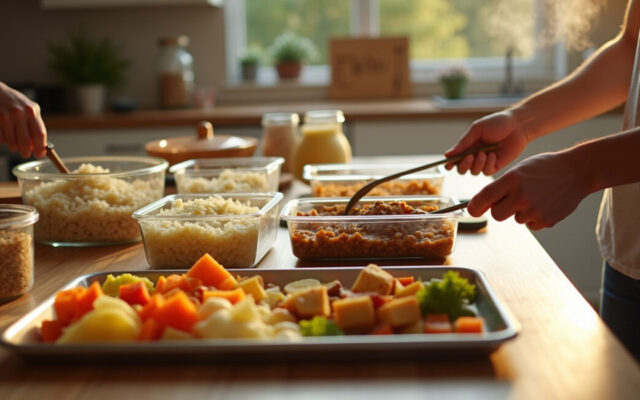
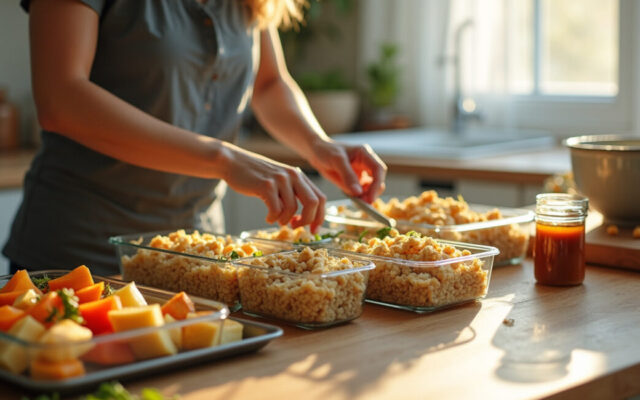
A good workflow makes batch cooking feel surprisingly calm. You are not cooking seven meals at once; you are moving through a sequence: wash, chop, roast, simmer, cool, portion. That sequence protects quality and reduces wasted motion in the kitchen.
The Order That Saves the Most Time
- Start grains first, because they cook while you handle everything else.
- Put sheet-pan vegetables in the oven next.
- Cook proteins on a second pan or stovetop.
- Mix sauces while the main items finish.
- Cool everything before sealing containers.
Storage Rules That Matter
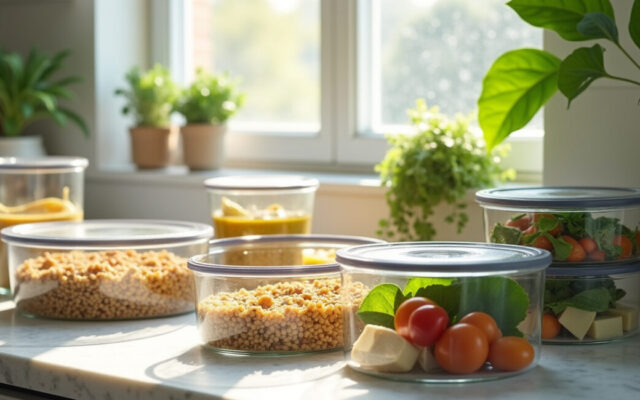
Use shallow containers for hot food so it cools quickly. Keep dressings and sauces separate when possible. Store raw-cut produce away from cooked items, and label containers with the date if you are making enough for several days. Food safety guidance from FoodSafety.gov is worth following, especially if you prep for four or five workdays at a time.
Glass containers are excellent for reheating and odor control, but lightweight BPA-free plastic containers are better for commuting. The best choice depends on how you actually carry your meals, not on which material sounds more ideal on paper.
Packing Meals for Work Without Losing Freshness
Work lunch meal prep succeeds or fails in the bag, not just in the kitchen. If the meal arrives soggy, lukewarm, or separated into unappealing layers, you will stop trusting your prep. That is why packaging deserves its own system.
Keep Wet and Dry Separate
Pack sauce in a small container, especially for bowls, salads, and wraps. If you are eating later in the day, keep crunchy toppings like seeds, nuts, and croutons separate until serving. This one habit preserves texture better than almost any recipe tweak.
Plan for Temperature Shifts
If you do not have access to a fridge, use an insulated lunch bag with a cold pack. Warm foods need secure containers that do not leak in transit. Cold meals often taste better after a short rest, but they should never sit at unsafe temperatures for long. That is not a taste issue; it is a safety issue.
Container Setup That Works
- 1-compartment containers: best for grain bowls and reheat meals
- 2- or 3-compartment containers: useful when keeping sauce separate
- Small screw-top jars: good for dressings, hummus, and overnight oats
If your routine also includes low-cost lifestyle upgrades, the same planning mindset works elsewhere too. For example, the eco-friendly self-care on a budget guide uses the same principle: remove friction, standardize the repeatable parts, and let the routine run itself.
Sample 5-Day Plant-Based Meal Prep Plan
This five-day plan is built to be practical, not fancy. It uses overlapping ingredients so you can prep once and reuse components without feeling stuck in leftovers. The meals lean toward high-protein plant-based meals, because satiety matters more than novelty when your schedule is tight.
| Day | Lunch | Dinner | Prep Note |
|---|---|---|---|
| Monday | Quinoa bowl with tofu, broccoli, and tahini | Lentil pasta with marinara and spinach | Reheat-friendly start to the week |
| Tuesday | Chickpea salad wrap with slaw | Brown rice, black beans, salsa, and roasted peppers | Use cold lunch, warm dinner |
| Wednesday | Edamame noodle bowl with peanut sauce | Sheet-pan tofu with potatoes and green beans | Midweek meal with strong leftovers |
| Thursday | Bean and grain bowl with avocado added at serving | Vegetable curry with rice | Keep avocado separate |
| Friday | Leftover mix-and-match bowl | Fast tofu scramble with toast and fruit | Use remaining ingredients |
For a weekend reset, the easiest move is to repeat the same structure with different sauces. That is how healthy meal prep becomes sustainable: not by chasing perfect variety, but by making the process easy enough that you will actually repeat it.
Próximos Passos
The best plant-based routine is the one that survives a busy calendar. Start by choosing just two lunches, two dinners, and one protein anchor for next week, then build the rest around those choices. Keep the system small until it feels automatic. Once the routine works for one week, expand it instead of overcomplicating it.
If you want plant based meal prep for busy professionals to save real time, test the framework for seven days, note where food gets soggy or boring, and tighten the workflow before adding more recipes. That kind of iteration beats trying to build a perfect menu on day one.
How Do Busy Professionals Start Plant-based Meal Prep Without Spending All Weekend Cooking?
Start with a one-hour planning block and two to three core ingredients, not a full weekly menu. Pick one grain, one protein, and two vegetables, then turn them into two lunches and two dinners. The point is to reduce decisions and cooking steps, so you can prep enough food to cover the busiest days without turning Sunday into a second job.
What Are the Best Plant-based Foods for Meal Prep That Stay Fresh and Filling?
The most reliable foods are tofu, tempeh, lentils, beans, chickpeas, edamame, roasted vegetables, quinoa, brown rice, potatoes, and sturdy greens like cabbage. These ingredients hold texture better than delicate produce and give you more protein and fiber, which helps meals feel satisfying. Soft toppings like avocado and fresh herbs are better added at serving time.
How Do You Make Plant-based Meals High in Protein and Satisfying?
Build each meal around a real protein anchor, not just vegetables and grains. Tofu, tempeh, lentils, black beans, soy yogurt, and edamame all help close the gap, especially when paired with fiber-rich carbs and healthy fats. The easiest mistake is making meals too light; if lunch leaves you hungry two hours later, the prep plan will not last.
What Containers and Storage Tips Keep Meal Prep Good for Work?
Use shallow containers for quick cooling, leakproof containers for commuting, and separate small cups for sauces and dressings. Keep crunchy toppings and wet ingredients apart until you eat. If you are packing food for several hours, use an insulated bag with a cold pack. Those small details protect both freshness and food safety.
Can Plant-based Meal Prep Work for People Who Hate Eating the Same Thing Every Day?
Yes, if you prep components instead of full identical meals. Cook one grain, one or two proteins, several vegetables, and two sauces, then mix them differently through the week. A bowl can become a wrap, a salad, or a rice plate with almost no extra work. The variety comes from assembly, not from cooking six separate recipes.